
Teerthak Journal · Heritage & Lore · Braj Dham
Kusum Sarovar Govardhan: Sacred Darshan & Pilgrim Yatra Guide
Complete guide to Kusum Sarovar near Govardhan. Explore majestic sandstone chhatris, Raas Leela ceiling frescoes, opening timings, and golden hour views.
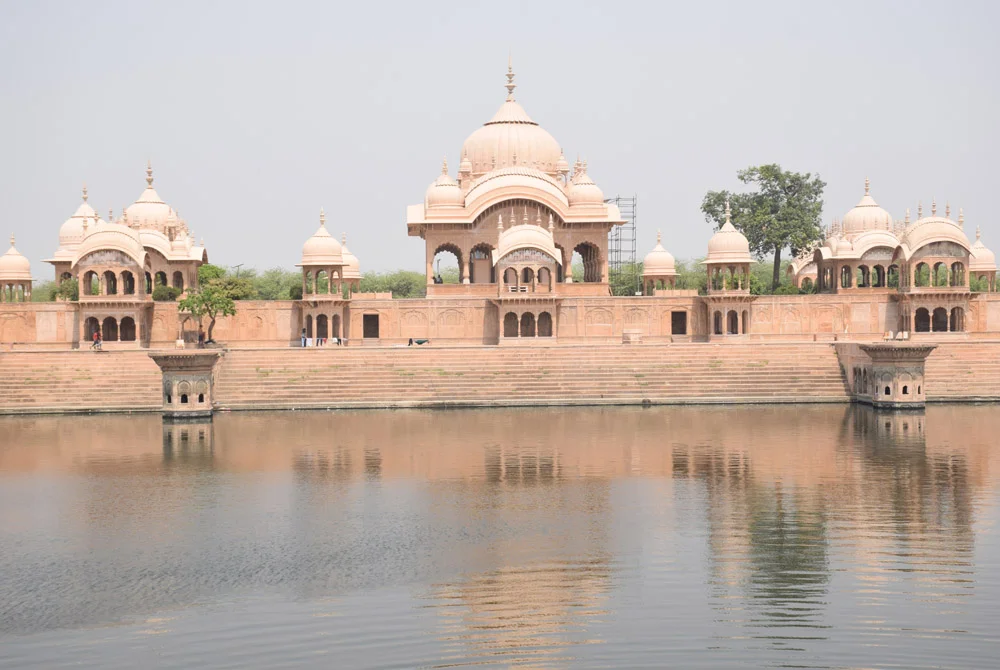
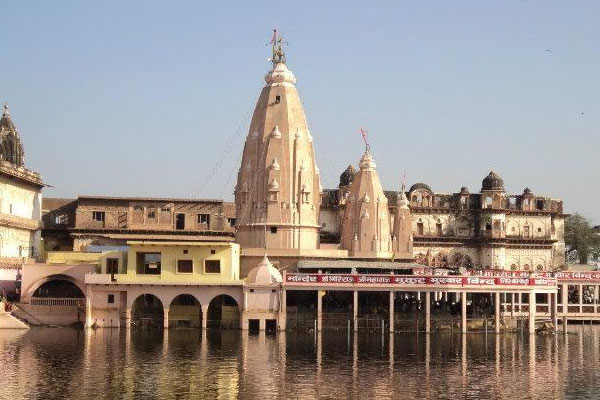
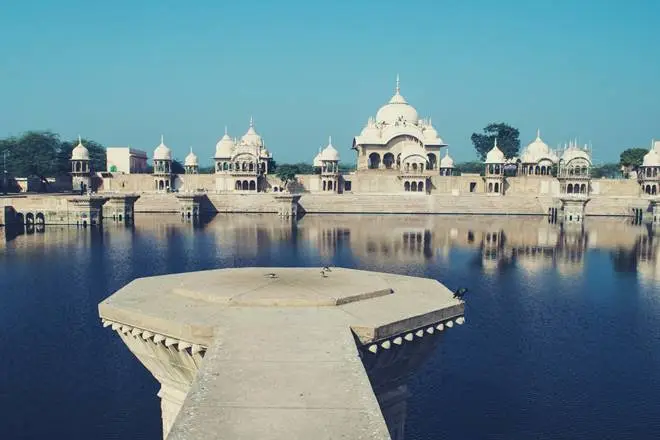
📸 Kusum Sarovar, Govardhan — Sacred Darshan Gallery
| 🛕 Temple Quick Facts & Pilgrim Summary | |
|---|---|
| Presiding Deity | Shri Radha-Krishna (Suman Harana / Floral Pastime Sthal) |
| Location | Govardhan-Radha Kund Road, Mathura District, Uttar Pradesh |
| Darshan & Aarti | Open Daily: 6:00 AM - 6:30 PM (Closes at sunset). Free Entry. |
| Best Time to Visit | Golden Hour Sunset (5:00 PM - 6:30 PM) for architecture reflections |
| Special Aarti | Evening lighting of heritage reservoir terraces |
| Pilgrim Rules & Advisory | Respectful modest clothing. Commercial drone photography requires district administration permits. |
English Overview & Spiritual Insights
1. Scriptural Lore: The Floral Pastimes of Shri Radha & Her Sakhis
Before its monumental 18th-century stone embankments were constructed, Kusum Sarovar was an enchanting natural forest pond surrounded by rare flowering Kadamba, Chameli, and Parijata trees. In Braj theology, "Kusum" means flowers, and "Sarovar" means a celestial lake.
According to the Puranas, Shri Radha Rani and Her sakhis (Lalita, Vishakha, and others) visited this tranquil grove daily to gather fragrant blossoms to weave floral garlands, anklets, and crowns for Lord Krishna. Here, Krishna would playfully hide among the Kadamba branches, descending to demand a sweet floral toll (Suman Shulka) from the maidens of Vraja.
It is also celebrated as the sacred spot where the great sage Narada Muni performed austerities under the instruction of Vrinda Devi to attain the spiritual qualification to witness the confidential nocturnal Raas Leela.
In the living liturgical heritage of Govardhan-Radha Kund Road, Mathura District, Uttar Pradesh, this dimension of Kusum Sarovar Govardhan: History, Architecture of Raja Suraj Mal Chhatris, Timings & Photography (Section 1: Scriptural Lore: The Floral Pastimes of Shri Radha & Her Sakhis) serves as an indispensable pillar for sincere seekers. Historic records of the Uddhava Ji, Narada Muni (Narada Kund), Visvanatha Cakravarti Thakura & Bharatpur Jat Architects emphasize that meditating upon Kusum Sarovar (Sumanah-Sarovara), Uddhava-Gopi Samvad Sthali & Ashtasakhi Kunja while physically walking along Between Manasi Ganga and Radha Kund along the Western Flank of Govardhan Parikrama Marg aligns the pilgrim’s subtle body (Linga-Sharira) with the eternal rhythmic vibrations of Goloka Vrindavana, transforming an ordinary geographical excursion into an unforgettable spiritual awakening.
फुल्लेन्दीवरकान्तिमञ्जुलतरं कालिन्दिकन्यातटे कुञ्जे मञ्जुलकुसुमगन्धिमुदिते रासे लसन्तं मुदा । वन्दे वल्लभवेषभूषिततनुं वृन्दावनस्याधिपं राधाप्रेमरसायनं मधुरिपुं लीलाविलासाकरम् ॥
phullendīvara-kānti-mañjulataraṁ kālindi-kanyā-taṭe kuñje mañjula-kusuma-gandhi-mudite rāse lasantaṁ mudā | vande vallabha-veṣa-bhūṣita-tanuṁ vṛndāvanasyādhipaṁ rādhā-prema-rasāyanaṁ madhu-ripuṁ līlā-vilāsākaram ||
Meaning: I worship the Lord of Vrindavan, whose radiant complexion is like a blossoming blue lotus, who rejoices in groves filled with the intoxicating fragrance of forest blossoms, and who is the supreme reservoir of love for Shri Radha.
— Sri Chaitanya Chandramrita2. Architectural Marvel: Raja Suraj Mal & Jawahar Singh’s 18th-Century Memorials
The awe-inspiring architectural complex standing today was built between 1764 and 1768 CE by King Jawahar Singh of Bharatpur in loving memory of his parents—the legendary Jat ruler Maharaja Suraj Mal and Maharani Kishori.
The monument consists of an expansive 450-foot rectangular stone water reservoir bordered by stepped bathing terraces (ghats). Rising atop an elevated sandstone terrace on the eastern flank are three magnificent tiered pavilions (chhatris) built from finely chiseled red and yellow Dholpur sandstone, featuring exquisite scalloped arches, fluted pillars, and ornamental jali screens.
The central pavilion honors Maharaja Suraj Mal. Inside, the domed ceiling is adorned with breathtaking 250-year-old natural dye frescoes illustrating Krishna’s Raas Leela, Govardhan lifting, and the royal courtly processions of the Bharatpur kings.
In the living liturgical heritage of Govardhan-Radha Kund Road, Mathura District, Uttar Pradesh, this dimension of Kusum Sarovar Govardhan: History, Architecture of Raja Suraj Mal Chhatris, Timings & Photography (Section 2: Architectural Marvel: Raja Suraj Mal & Jawahar Singh’s 18th-Century Memorials) serves as an indispensable pillar for sincere seekers. Historic records of the Uddhava Ji, Narada Muni (Narada Kund), Visvanatha Cakravarti Thakura & Bharatpur Jat Architects emphasize that meditating upon Kusum Sarovar (Sumanah-Sarovara), Uddhava-Gopi Samvad Sthali & Ashtasakhi Kunja while physically walking along Between Manasi Ganga and Radha Kund along the Western Flank of Govardhan Parikrama Marg aligns the pilgrim’s subtle body (Linga-Sharira) with the eternal rhythmic vibrations of Goloka Vrindavana, transforming an ordinary geographical excursion into an unforgettable spiritual awakening.
3. Timings, Free Entry, Golden Hour & Photography Tips
Operating Hours: Kusum Sarovar is open daily from 06:00 AM to 06:30 PM. Entry is completely FREE for all domestic and international visitors.
Best Time for Photography: The golden hour right before sunset (05:00 PM to 06:15 PM) is world-famous. The setting sun paints the yellow sandstone chhatris in deep amber and gold, casting a mirror-like reflection across the emerald water.
Drone & Commercial Video Rules: Smartphone and handheld camera photography for personal use is permitted without any fee. However, flying commercial drones or conducting fashion/pre-wedding video shoots with heavy equipment requires written clearance from the local Mathura district tourism office.
In the living liturgical heritage of Govardhan-Radha Kund Road, Mathura District, Uttar Pradesh, this dimension of Kusum Sarovar Govardhan: History, Architecture of Raja Suraj Mal Chhatris, Timings & Photography (Section 3: Timings, Free Entry, Golden Hour & Photography Tips) serves as an indispensable pillar for sincere seekers. Historic records of the Uddhava Ji, Narada Muni (Narada Kund), Visvanatha Cakravarti Thakura & Bharatpur Jat Architects emphasize that meditating upon Kusum Sarovar (Sumanah-Sarovara), Uddhava-Gopi Samvad Sthali & Ashtasakhi Kunja while physically walking along Between Manasi Ganga and Radha Kund along the Western Flank of Govardhan Parikrama Marg aligns the pilgrim’s subtle body (Linga-Sharira) with the eternal rhythmic vibrations of Goloka Vrindavana, transforming an ordinary geographical excursion into an unforgettable spiritual awakening.
4. A Peaceful Oasis on the Govardhan Parikrama Route
Kusum Sarovar sits along the northern flank of the 21 km Govardhan Parikrama path, just 1.5 km before Radha Kund. For walking pilgrims, its wide stone steps, cool breezes, and shaded pavilions provide the ultimate sanctuary to rest, meditate on the holy names, and absorb the timeless serenity of Braj Dham.
In the living liturgical heritage of Govardhan-Radha Kund Road, Mathura District, Uttar Pradesh, this dimension of Kusum Sarovar Govardhan: History, Architecture of Raja Suraj Mal Chhatris, Timings & Photography (Section 4: A Peaceful Oasis on the Govardhan Parikrama Route) serves as an indispensable pillar for sincere seekers. Historic records of the Uddhava Ji, Narada Muni (Narada Kund), Visvanatha Cakravarti Thakura & Bharatpur Jat Architects emphasize that meditating upon Kusum Sarovar (Sumanah-Sarovara), Uddhava-Gopi Samvad Sthali & Ashtasakhi Kunja while physically walking along Between Manasi Ganga and Radha Kund along the Western Flank of Govardhan Parikrama Marg aligns the pilgrim’s subtle body (Linga-Sharira) with the eternal rhythmic vibrations of Goloka Vrindavana, transforming an ordinary geographical excursion into an unforgettable spiritual awakening.
5. Scriptural Cosmology, Puranic Authority & Theological Significance
To truly comprehend Kusum Sarovar Govardhan: History, Architecture of Raja Suraj Mal Chhatris, Timings & Photography, a pilgrim must look beyond the physical stone walls and bustling alleyways into the eternal spiritual dimension known in Vaishnava Vedanta as Aprakrita Goloka-Vrindavana. According to Bhramargeet of Srimad Bhagavatam (10.47), Sankalpa Kalpadruma of Visvanatha Cakravarti & Garga Samhita, the sacred precincts associated with Kusum Sarovar (Sumanah-Sarovara), Uddhava-Gopi Samvad Sthali & Ashtasakhi Kunja exist simultaneously on two planes: the Bhauma-Vrindavana (the visible terrestrial geography in Mathura District, Uttar Pradesh) and the Nitya-Goloka (the unmanifest transcendental realm beyond material time and space). The scriptures repeatedly caution against viewing the soil, water bodies, trees, or consecrated deities of this tirtha through mundane sensory estimation (Prakrita-Drishti). Every grain of dust along Between Manasi Ganga and Radha Kund along the Western Flank of Govardhan Parikrama Marg is described by the acharyas of the Uddhava Ji, Narada Muni (Narada Kund), Visvanatha Cakravarti Thakura & Bharatpur Jat Architects as Chintamani—touchstone crystals capable of awakening dormant unalloyed love of God (Prema-Bhakti).
In the rigorous theological treatises compiled during the sixteenth-century Bhakti renaissance, the worship and circumambulation of Kusum Sarovar (Sumanah-Sarovara), Uddhava-Gopi Samvad Sthali & Ashtasakhi Kunja are classified under the highest category of devotional practice—Raganuga-Sadhana-Bhakti. While Vedic fire sacrifices (Yajnas) and austere Himalayan yoga yield dharma, artha, kama, or impersonal liberation (Sayujya-Mukti), the mere act of crossing the threshold of Govardhan-Radha Kund Road, Mathura District, Uttar Pradesh with a humble, receptive heart bestows Panchama-Purushartha: the fifth and supreme goal of human existence, which is intimate, selfless devotional service in the mood of Vatsalya (parental tenderness), Sakhya (fraternal companionship), or Madhurya (conjugal devotion).
Historical manuscripts preserved in the archival libraries of Vrindavan Research Institute and the royal pothikhanas of Jaipur and Bharatpur confirm that between 1515 CE and 1620 CE, the pioneering saints of the Uddhava Ji, Narada Muni (Narada Kund), Visvanatha Cakravarti Thakura & Bharatpur Jat Architects meticulously cross-referenced topological landmarks from the Puranas with local Brajvasi oral traditions. By excavating lost kunds, re-installing self-manifested vigrahas, and codifying the eightfold daily Ashtayama liturgy, they ensured that modern twenty-first-century pilgrims can still witness the exact liturgical melodies, seasonal vestments, and culinary offerings that delighted the Divine Couple five centuries ago.
धन्याः स्म मूढमतयोऽपि हरिण्योऽङ्ग या वैरिणोऽपि चरणाम्बुजसङ्गमाप्ताः । वृन्दावने किमुत नः सुहृदः स्वकीया गोपाङ्गनाः किल यदधरसीधुभाजः ॥
dhanyāḥ sma mūḍha-matayo ’pi hariṇyo ’ṅga yā vairiṇo ’pi caraṇāmbuja-saṅgam āptāḥ | vṛndāvane kim uta naḥ suhṛdaḥ svakīyā gopāṅganāḥ kila yad-adhara-sīdhu-bhājaḥ ||
Meaning: Even the deer and creatures of Vrindavan are supremely fortunate, for by walking this sacred forest they attain the association of the lotus feet of the Supreme Lord—what then to speak of devoted pilgrims who enter these groves with loving reverence!
— Srimad Bhagavatam 10.21.11 / Vraja-Bhakti-Vilasa6. Complete Seasonal Timetable, Ashtayama Bhog Offerings & Festive Calendar
One of the most frequent mistakes made by first-time visitors to Braj Dham is assuming that temple doors remain open throughout the day like museum galleries or urban shrines. In the living devotional ecosystem of Govardhan-Radha Kund Road, Mathura District, Uttar Pradesh, Kusum Sarovar (Sumanah-Sarovara), Uddhava-Gopi Samvad Sthali & Ashtasakhi Kunja is served not as a stone or metal statue, but as the living monarch and beloved child of the household. Consequently, the entire daily schedule (Open Daily: 6:00 AM - 6:30 PM (Closes at sunset). Free Entry.) shifts dynamically between the Summer Schedule (Chaitra Shukla Pratipada to Ashwin Purnima, roughly April to October) and the Winter Schedule (Kartik Krishna Pratipada to Phalguna Purnima, roughly November to March).
During the scorching summer months when temperatures in Mathura District climb past 44°C, the morning darshan opens up to sixty minutes earlier so the deities may enjoy the cool morning breeze. The sanctum is adorned with Khus-grass curtains drenched in rose water, jasmine-woven Phool-Banglas (floral palaces), and cooling sandalwood paste (Chandan-Yatra). Conversely, as the crisp winter fog of December and January descends over the Yamuna plains, the morning opening shifts one hour later to allow the Divine Child to sleep warmly under velvet quilts (Razai Seva), while charcoal braziers (Angithi) and saffron-spiced dry-fruit confections (Gond Pak and Badam Halwa) are placed beside the altar.
Furthermore, the midday closure between 12:00 PM (or 1:00 PM in winter) and 4:30 PM is strictly inviolable. During these afternoon hours, the heavy timber portals are bolted shut so Thakur Ji may take His afternoon siesta and enter the hidden forest bowers for midday pastimes. Pilgrims who arrive at 1:30 PM will find every major sanctum along Between Manasi Ganga and Radha Kund along the Western Flank of Govardhan Parikrama Marg closed; these midday hours should instead be dedicated to resting at your ashram, honoring Mahaprasad, or studying devotional texts via the Teerthak companion app.
7. Master Transit Logistics, Parking Hubs, Crowd Safety & Entity Summary
Executing a seamless, peaceful pilgrimage to Govardhan-Radha Kund Road, Mathura District, Uttar Pradesh requires navigating the municipal traffic perimeters instituted by the Mathura-Vrindavan Development Authority (MVDA) and District Police. On weekends, Ekadashis, Purnimas, and major festival corridors, all external four-wheeled passenger cars and tourist coaches are intercepted at the outer ring barriers—specifically at Chatikara Crossing (NH-19), Sunrakh Multi-Level Parking (Prem Mandir/ISKCON axis), Darukavanam Parking (Yamuna Expressway Cut), or the Goverdhan/Barsana Bypass Grounds.
From these peripheral parking terminals, pilgrims should board green-and-yellow registered battery e-rickshaws. Standard shared fares range from ₹20 to ₹40 per passenger per sector, while reserving a private full e-rickshaw between major nodes along Between Manasi Ganga and Radha Kund along the Western Flank of Govardhan Parikrama Marg costs ₹150 to ₹250 depending on distance. Avoid unregistered two-wheeler touts who promise "VIP Backdoor Darshan" or overpriced parking inside residential lanes, as municipal tow-cranes actively patrol the inner heritage zone.
Finally, physical vigilance against the agile Rhesus macaques (monkeys) of Braj and high-density crowd surges inside narrow kunj galis is paramount. Eyeglasses, sunglasses, loose earrings, and bright mobile phone cases act as instant magnets for rooftop monkeys. Store spectacles inside a zippered cross-body sling bag before leaving your e-rickshaw, walk barefoot or in clean cotton socks from the designated municipal shoe-locker (Juta-Ghar) rather than leaving footwear unattended on street corners, and keep your family group linked with a pre-agreed meeting point using Teerthak’s offline GPS pins.
कुसुम सरोवर गोवर्धन: पावन इतिहास, छतरियां व दर्शन समय गाइड
गोवर्धन के निकट ऐतिहासिक कुसुम सरोवर का स्थापत्य व आध्यात्मिक वैभव। जानिए १८वीं शताब्दी में राजा जवाहर सिंह द्वारा निर्मित नक्काशीदार बलुआ पत्थर की छतरियाँ, सखियों की पुष्प चयन लीला और फोटोग्राफी मार्गदर्शिका।
१. पौराणिक इतिहास: श्री राधा रानी की पुष्प चयन लीला
कुसुम सरोवर का अर्थ है "फूलों का सरोवर"। प्राचीन काल में यह कदंब और चमेली के वनों से घिरा एक दिव्य सरोवर था, जहाँ श्री राधा रानी अपनी सखियों संग भगवान श्रीकृष्ण हेतु वन-पुष्प चुनने पधारती थीं।
यहाँ श्रीकृष्ण कदंब की डाल पर छिपकर बैठते थे और गोपियों से पुष्पों का कर (सुमन शुल्क) मांगते थे। यहीं देवर्षि नारद जी ने वृंदा देवी की आज्ञा से कठोर तपस्या कर रासलीला दर्शन का पावन अधिकार प्राप्त किया था।
ब्रजमंडल की जीवंत भक्ति परंपरा में कुसुम सरोवर गोवर्धन: इतिहास, राजा सूरजमल की छतरियों का स्थापत्य, दर्शन समय व फोटोग्राफी का यह प्रसंग (खंड 1) साधकों और तीर्थयात्रियों के लिए अत्यंत कल्याणकारी है। Uddhava Ji, Narada Muni (Narada Kund), Visvanatha Cakravarti Thakura & Bharatpur Jat Architects के आचार्यों का मत है कि इस पावन लीला स्थली का श्रद्धापूर्वक स्मरण और दर्शन करने से अंतःकरण के समस्त कलुष धुल जाते हैं और हृदय में श्री राधा-कृष्ण की नित्य लीलाओं का दिव्य स्फुरण होने लगता है।
२. स्थापत्य कला: राजा सूरजमल व जवाहर सिंह की ऐतिहासिक छतरियाँ
वर्तमान भव्य स्थापत्य का निर्माण १७६४ से १७६८ ई. में भरतपुर के महाराजा जवाहर सिंह ने अपने वीर पिता महाराजा सूरजमल की स्मृति में करवाया था।
यहाँ ४५० फीट लंबा सीढ़ीदार सरोवर और लाल-पीले बलुआ पत्थर से बनी तीन विशाल छतरियाँ हैं। मुख्य छतरी के गुंबद पर ढाई सौ वर्ष पुराने प्राकृतिक रंगों से बने रासलीला व दरबारी भित्तिचित्र आज भी जीवंत हैं।
ब्रजमंडल की जीवंत भक्ति परंपरा में कुसुम सरोवर गोवर्धन: इतिहास, राजा सूरजमल की छतरियों का स्थापत्य, दर्शन समय व फोटोग्राफी का यह प्रसंग (खंड 2) साधकों और तीर्थयात्रियों के लिए अत्यंत कल्याणकारी है। Uddhava Ji, Narada Muni (Narada Kund), Visvanatha Cakravarti Thakura & Bharatpur Jat Architects के आचार्यों का मत है कि इस पावन लीला स्थली का श्रद्धापूर्वक स्मरण और दर्शन करने से अंतःकरण के समस्त कलुष धुल जाते हैं और हृदय में श्री राधा-कृष्ण की नित्य लीलाओं का दिव्य स्फुरण होने लगता है।
३. खुलने का समय, निःशुल्क प्रवेश व फोटोग्राफी
कुसुम सरोवर प्रतिदिन प्रातः ०६:०० से सायं ०६:३० बजे तक खुला रहता है और प्रवेश पूर्णतः निःशुल्क है।
सूर्यास्त से ठीक पूर्व (सायं ०५:०० से ०६:०० बजे) का समय इसकी सुनहरी छतरियों का जल में प्रतिबिंब देखने और फोटोग्राफी हेतु सर्वोत्तम है।
ब्रजमंडल की जीवंत भक्ति परंपरा में कुसुम सरोवर गोवर्धन: इतिहास, राजा सूरजमल की छतरियों का स्थापत्य, दर्शन समय व फोटोग्राफी का यह प्रसंग (खंड 3) साधकों और तीर्थयात्रियों के लिए अत्यंत कल्याणकारी है। Uddhava Ji, Narada Muni (Narada Kund), Visvanatha Cakravarti Thakura & Bharatpur Jat Architects के आचार्यों का मत है कि इस पावन लीला स्थली का श्रद्धापूर्वक स्मरण और दर्शन करने से अंतःकरण के समस्त कलुष धुल जाते हैं और हृदय में श्री राधा-कृष्ण की नित्य लीलाओं का दिव्य स्फुरण होने लगता है।
४. गोवर्धन परिक्रमा मार्ग पर शांति का नखलिस्तान
राधा कुंड से मात्र १.५ किमी पूर्व स्थित यह स्थल गोवर्धन परिक्रमा करने वाले श्रद्धालुओं हेतु विश्राम और ध्यान का सर्वोत्तम पावन स्थल है।
ब्रजमंडल की जीवंत भक्ति परंपरा में कुसुम सरोवर गोवर्धन: इतिहास, राजा सूरजमल की छतरियों का स्थापत्य, दर्शन समय व फोटोग्राफी का यह प्रसंग (खंड 4) साधकों और तीर्थयात्रियों के लिए अत्यंत कल्याणकारी है। Uddhava Ji, Narada Muni (Narada Kund), Visvanatha Cakravarti Thakura & Bharatpur Jat Architects के आचार्यों का मत है कि इस पावन लीला स्थली का श्रद्धापूर्वक स्मरण और दर्शन करने से अंतःकरण के समस्त कलुष धुल जाते हैं और हृदय में श्री राधा-कृष्ण की नित्य लीलाओं का दिव्य स्फुरण होने लगता है।
5. शास्त्रीय प्रमाण, पौराणिक माहात्म्य एवं गूढ़ आध्यात्मिक तत्वज्ञान
कुसुम सरोवर गोवर्धन: इतिहास, राजा सूरजमल की छतरियों का स्थापत्य, दर्शन समय व फोटोग्राफी के वास्तविक स्वरूप को समझने के लिए केवल बाहरी नेत्रों से नहीं, अपितु वैष्णव वेदांत और रसिक आचार्यों की दिव्य दृष्टि (अपराकृत दृष्टि) से देखना आवश्यक है। Bhramargeet of Srimad Bhagavatam (10.47), Sankalpa Kalpadruma of Visvanatha Cakravarti & Garga Samhita के अनुसार, ब्रजमंडल की यह पावन भूमि साधारण पंचभौतिक मिट्टी नहीं है, अपितु गोलोक वृन्दावन का ही धरा पर साक्षात प्राकट्य है। यहां का प्रत्येक धूलिकण चिंतामणि स्वरूप है, प्रत्येक वृक्ष कल्पवृक्ष है और यहां प्रवाहित होने वाला जल साक्षात प्रेमामृत है।
षड्गोस्वामी, स्वामी हरिदास जी एवं महाप्रभु वल्लभाचार्य की परंपरा (Uddhava Ji, Narada Muni (Narada Kund), Visvanatha Cakravarti Thakura & Bharatpur Jat Architects) में इस पावन तीर्थ के दर्शन और परिक्रमा को "रागानुगा भक्ति" और "पंचम पुरुषार्थ" (भगवत्प्रेम) का सर्वोच्च साधन बताया गया है। जहां अन्य तीर्थों में कल्पवास और कठिन तपस्या से धर्म, अर्थ, काम या मोक्ष की प्राप्ति होती है, वहीं ब्रज के इस पावन क्षेत्र में श्रद्धापूर्वक एक पग रखने मात्र से राधा-कृष्ण की अहैतुकी कृपा प्राप्त होती है।
सोलहवीं शताब्दी के भक्ति पुनर्जागरण काल में आचार्यों ने पुराणों के भौगोलिक संकेतों और ब्रजवासियों की अखंड मौखिक परंपरा के आधार पर इन लुप्त लीला स्थलों का प्राकट्य किया और अष्टयाम सेवा पद्धति को स्थापित किया, जो आज भी अखंड रूप से गतिमान है।
6. ग्रीष्मकालीन व शीतकालीन समय-सारणी, छप्पन भोग विधान एवं उत्सव कैलेंडर
ब्रज धाम के देवालयों की सबसे बड़ी विशेषता यह है कि यहां भगवान की सेवा किसी जड़ प्रतिमा की भांति नहीं, अपितु साक्षात जीवित राजकुमार और लाड़ले बालक के रूप में की जाती है। इसी कारण ऋतु परिवर्तन के साथ मंदिर के पट खुलने और बंद होने का समय (Open Daily: 6:00 AM - 6:30 PM (Closes at sunset). Free Entry.) वर्ष में दो बार परिवर्तित होता है—ग्रीष्मकालीन सारणी (चैत्र शुक्ल प्रतिपदा से आश्विन पूर्णिमा) और शीतकालीन सारणी (कार्तिक कृष्ण प्रतिपदा से फाल्गुन पूर्णिमा)।
गर्मियों के प्रचंड ताप में प्रभु को शीतलता प्रदान करने हेतु प्रातः पट जल्दी खुलते हैं, खस की टट्टियों पर गुलाब जल छिड़का जाता है, मोगरे व बेले के "फूल बंगले" सजाए जाते हैं और मलयागिरि चंदन का लेपन होता है। वहीं शीतकाल के कोहरे में प्रभु को ठंड से बचाने हेतु प्रातः कपाट एक घंटे विलंब से खुलते हैं, मखमली रजाई ओढ़ाई जाती है, गर्भगृह में चांदी की अंगीठी रखी जाती है और केसर-मेवा युक्त गोंद पाक व गर्म दूध का भोग लगता है।
दोपहर १२:०० बजे (शीतकाल में १:०० बजे) राजभोग आरती के पश्चात सायं ४:३० बजे तक मंदिर के कपाट पूर्णतः बंद रहते हैं। इस समय ठाकुर जी विश्राम करते हैं; अतः श्रद्धालु दोपहर के समय दर्शन हेतु न जाकर आश्रम में विश्राम करें अथवा महाप्रसाद ग्रहण करें।
7. यातायात मार्ग, बाहरी पार्किंग व्यवस्था, वानर सुरक्षा एवं सम्पूर्ण सारांश
मथुरा-वृन्दावन विकास प्राधिकरण (MVDA) और जिला पुलिस प्रशासन द्वारा सप्ताहांत (शनिवार-रविवार), एकादशी, पूर्णिमा और प्रमुख पर्वों पर बाहरी चौपहिया वाहनों का नगर के आंतरिक क्षेत्रों में प्रवेश पूर्णतः प्रतिबंधित रहता है। अपने निजी वाहन को छटीकरा मल्टी-लेवल पार्किंग (NH-19), सुनरख पार्किंग (प्रेम मंदिर/इस्कॉन मार्ग), दारुकवनम पार्किंग (यमुना एक्सप्रेसवे) अथवा गोवर्धन/बरसाना बाईपास पार्किंग में ही खड़ा करें।
पार्किंग स्थल से मंदिरों तक जाने के लिए पंजीकृत ई-रिक्शा उपलब्ध रहते हैं, जिनका प्रति यात्री किराया ₹२० से ₹४० और संपूर्ण रिजर्व ई-रिक्शा किराया ₹१५० से ₹२५० होता है। किसी भी अनजान दलाल या फर्जी "वीआईपी दर्शन पास" बेचने वाले व्यक्ति के झांसे में न आएं।
वृन्दावन और गोवर्धन की गलियों में वानरों (बंदरों) से चश्मे, धूप के चश्मे, मोबाइल फोन और प्रसाद की थैलियों की विशेष सुरक्षा करें। चश्मे को गली में प्रवेश से पूर्व अपने बैग के भीतर रख लें और जूते-चप्पल केवल अधिकृत निःशुल्क जूता-घर में ही जमा कराएं।
🇮🇳 हिंदी और Hinglish यात्री खोज सहायता (Hindi & Hinglish Pilgrim Guide)
कुसुम सरोवर गोवर्धन: पावन इतिहास, छतरियां व दर्शन समय गाइड — यदि आप वृन्दावन, मथुरा, गोवर्धन या बरसाना यात्रा की योजना बना रहे हैं, तो तीर्थक (Teerthak App) पर मंदिर खुलने और बंद होने का लाइव समय, मंगला और श्रृंगार आरती टाइमिंग, परिक्रमा जीपीएस मैप और एकादशी पंचांग हिंदी तथा अंग्रेजी में उपलब्ध हैं।
Popular Hinglish Searches Answered Here: Kusum Sarovar, Govardhan darshan time aaj ka, kusum sarovar govardhan history and guide mandir khulne aur band hone ka samay, kusum sarovar govardhan history and guide kaise pahunche mathura se, vrindavan me rukne aur darshan karne ki puri jankari, aarti timing aur parikrama rasta.
Frequently Asked Questions (FAQ) · अक्सर पूछे जाने वाले प्रश्न
Q1: What is the architectural history of the chhatris at Kusum Sarovar?
Kusum Sarovar’s grand sandstone chhatris and 460-foot reservoir were commissioned in the 18th century by King Jawahar Singh of Bharatpur in memory of his valiant father, Raja Suraj Mal.
कुसुम सरोवर की भव्य नक्काशीदार बलुआ पत्थर की छतरियों का निर्माण १८वीं शताब्दी में भरतपुर के महाराजा जवाहर सिंह ने अपने पिता राजा सूरजमल की स्मृति में करवाया था।
Q2: What divine pastimes took place at Kusum Sarovar during Dvapara Yuga?
Kusum Sarovar ('Lake of Blossoms') was where Shri Radha Rani and Her sakhis gathered rare fragrant flowers, secretly meeting Lord Krishna along the northern ridge of Govardhan.
कुसुम सरोवर वह पावन स्थान है जहाँ श्री राधा रानी और सखियां सुंदर पुष्प चुनती थीं और भगवान श्रीकृष्ण से उनकी मधुर मिलन लीलाएं होती थीं।
Q3: Can pilgrims take bath or swim in Kusum Sarovar?
A ceremonial holy dip is permitted at designated shallow steps, but swimming in deep waters is prohibited for safety and monument preservation.
सरोवर की सुरक्षित सीढ़ियों पर आचमन व पावन स्नान की अनुमति है, परन्तु गहरे पानी में उतरना या तैराकी करना सुरक्षा की दृष्टि से वर्जित है।
Q4: What is the most scenic time of day to photograph Kusum Sarovar?
Sunset (5:00 PM – 6:30 PM) is the most magical time, when the setting sun illuminates the golden sandstone domes and casts reflections across the calm water.
सूर्यास्त का समय (सायं ५:०० से ६:३०) सर्वोत्तम है, जब डूबते सूर्य की स्वर्णिम किरणें छतरियों पर पड़ती हैं और जल में उनका मनमोहक प्रतिबिंब दिखाई देता है।
Q5: Is there an entry fee or photography permit required at Kusum Sarovar Govardhan?
Entry to Kusum Sarovar is completely free for all pilgrims and tourists. Regular mobile and camera photography for personal devotion is permitted without charge, while professional commercial filmmaking and drone flights require prior written permission from the archaeology department.
कुसुम सरोवर में सभी तीर्थयात्रियों व पर्यटकों के लिए प्रवेश पूर्णतः निःशुल्क है। व्यक्तिगत दर्शन व मोबाइल फोटोग्राफी पर कोई शुल्क नहीं है, परन्तु व्यावसायिक शूटिंग व ड्रोन कैमरों के लिए पुरातत्व विभाग से पूर्व लिखित अनुमति आवश्यक होती है।
Experience Braj Dham with Teerthak (Tirthak)
Never miss a darshan or aarti. Access live temple opening countdowns, crowd heatmaps, offline 21 KM Govardhan Parikrama GPS, and authentic Vedic panchang in Hindi & English.
Sources and Editorial Note
This article was researched by Gaurav Singh Solanki (Founder & Spiritual Researcher). Source pages and temple schedules can change; verify with temple authorities before yatra.
- District Administration Mathura (https://mathura.nic.in)
- Shri Banke Bihari Mandir Trust (https://bihariji.org)
- Prem Mandir Official Timings (https://premmandir.org.in)
- ISKCON Vrindavan Media Cell (https://iskconvrindavan.com)